Flowers for Soldiers and Veterans: Which Bouquet to Choose
Flowers for a soldier are not a formality but a way to say “thank you” and “we were waiting for you”. A bouquet suits a male or female defender, a veteran, and also honouring the fallen. Here is which flowers to choose for Defenders Day, a homecoming from rotation or an award ceremony, how to put together a restrained “masculine” bouquet, and which flowers to bring to a memorial.
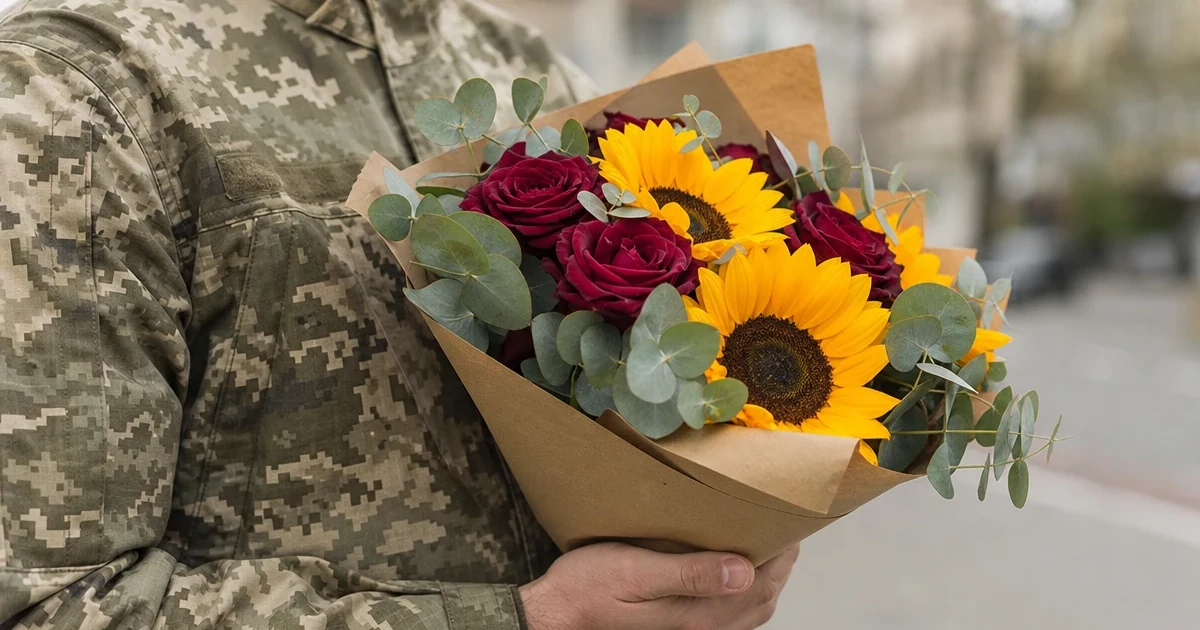
When to give flowers to the military
- 1 October — Defenders Day of Ukraine; greeting ideas in our article on Defenders Day wishes.
- 6 December — Armed Forces of Ukraine Day.
- 8 May — Day of Remembrance and Victory over Nazism in World War II; flowers for veterans and at monuments.
- 29 August — Day of Remembrance of Ukraine’s defenders who died fighting for independence.
- Personal occasions: return from rotation or captivity, an award, a promotion, a soldier’s birthday.
Which bouquet to choose for a defender
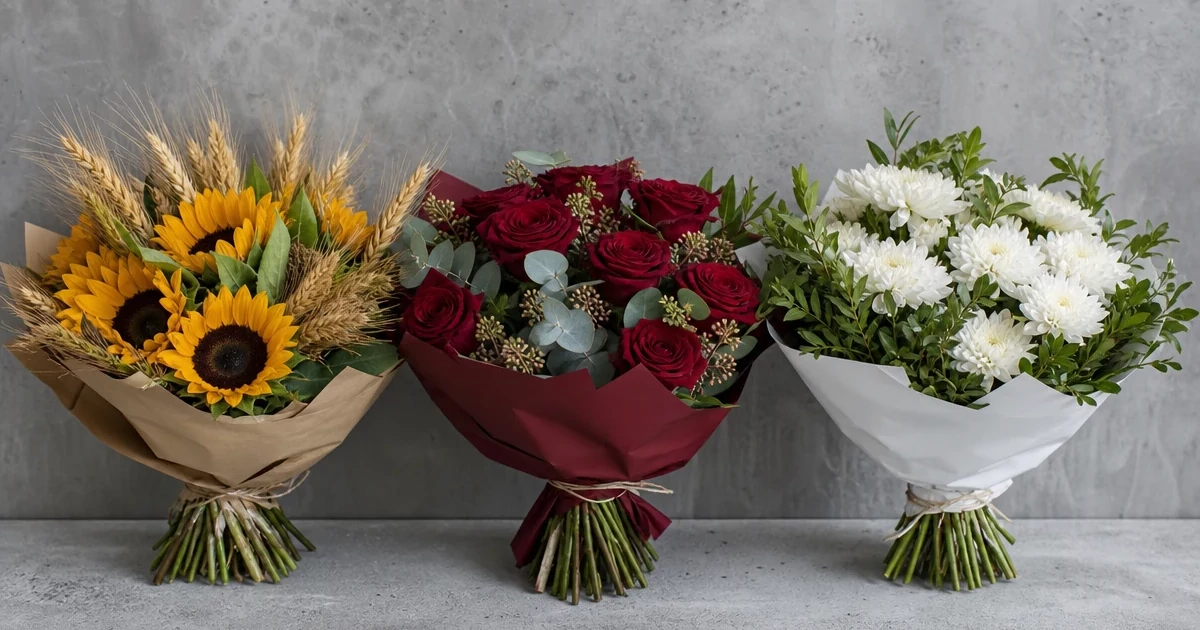
For a male soldier, a restrained bouquet works best: sunflowers, burgundy or white roses, chrysanthemums, gerberas, irises, plenty of greenery and minimal wrapping. Colours should be deep and calm: burgundy, white, green, yellow and blue (ideas in our article on the yellow and blue bouquet). For a female defender, softer roses, lisianthus or tulips are a good fit.
- Not too large: the person may be carrying bags or travelling.
- No strong scent if you are taking it to a military hospital — see flowers for a hospital.
- Add a card with a few words; see wishes for soldiers for ideas.
What the flowers in a defender’s bouquet mean
- Red roses and carnations — honour, courage, remembrance.
- Sunflower — Ukraine, light and life.
- White chrysanthemums — deep respect; in memorial arrangements, mourning.
- Wheat ears — the peaceful bread that defenders fight for.
- Viburnum — homeland and family.
- Laurel — an ancient symbol of victory and glory.
You do not need every symbol in one bouquet: two or three are enough for it to speak without words.
Flowers for a homecoming or award
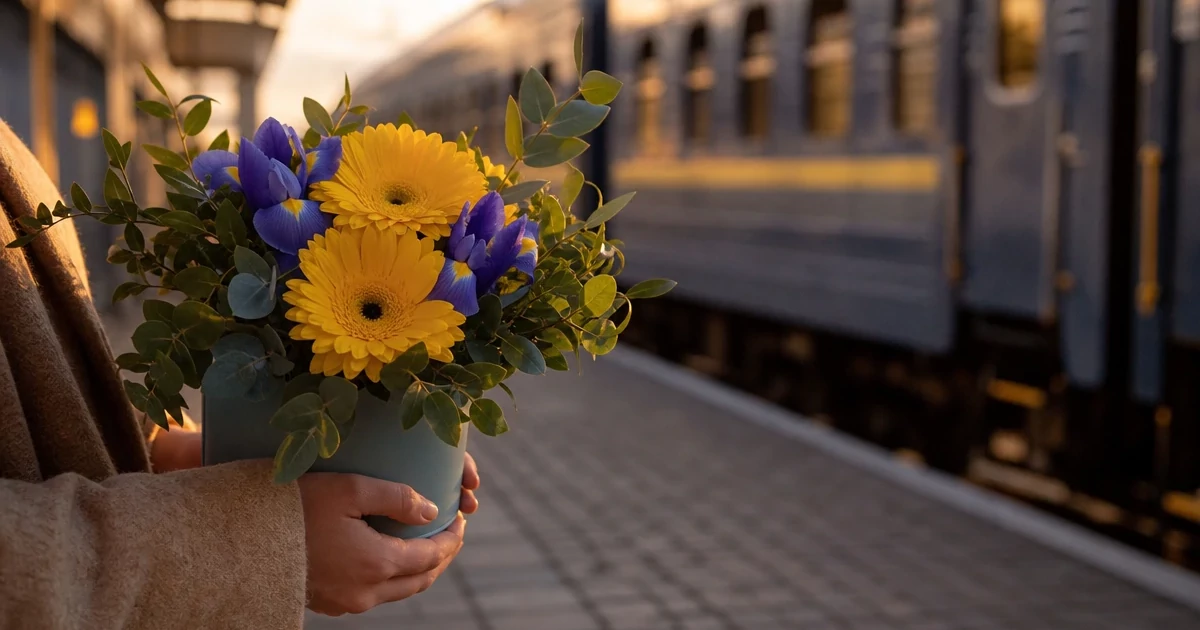
Meeting someone at the station calls for a compact, light bouquet: 7–11 stems in firm wrapping or a box so it can be held in one hand. For an award ceremony, classic roses or chrysanthemums with greenery are appropriate. Flowers pair well with a practical gift — see our ideas on what to give a soldier.
Flowers for a memorial or a soldier’s grave
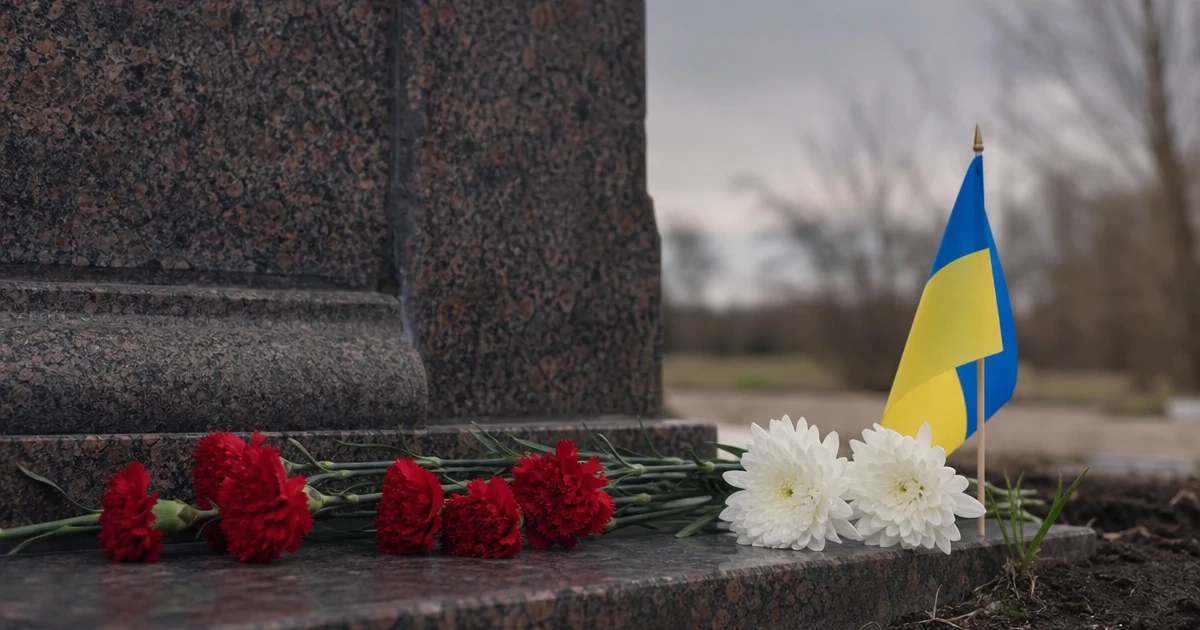
To honour the fallen, people bring an even number of flowers — this is the Ukrainian mourning tradition. Red carnations or roses, white chrysanthemums and viburnum are the usual choice; on remembrance days, red poppies. Flowers are laid without wrapping or with a simple ribbon that can be removed. More on etiquette in our article on funeral flowers, and perennial plants for graves in what to plant on a grave. Words of support for the family: condolences for a fallen soldier.
Things to keep in mind
- Not every soldier likes publicity — ask before posting a photo with the bouquet on social media.
- For a hospital, choose a bouquet in water or a potted plant, if allowed.
- For an elderly veteran, a light bouquet in a vase or box so it does not have to be held.
- If the person is currently at the front, order delivery to their family with a card in their name.
FAQ
Is it appropriate to give flowers to a male soldier?
Yes. Flowers are a sign of gratitude and respect, not only a “feminine” gift. Choose restrained bouquets: sunflowers, burgundy roses, chrysanthemums, minimal wrapping.
How many flowers should you bring to a soldier’s grave?
An even number — 2, 4, 6 or more. Red carnations or roses, or white chrysanthemums, are the usual choice.
What flowers should you give a veteran on 8 May?
Classic carnations, tulips or roses in a small bouquet; for an elderly veteran, flowers in a vase or box are easier to handle.

See photos in full size
Author: Maria Svitlovir
Graduated from Taras Shevchenko National University of Kyiv, Institute of Biology and Medicine (2001). BSc in Biology, MSc in Horticulture. Writes about plants, works at a garden centre selecting and repotting plants, and contributes to plant reference guides.
-
 How to prepare for Valentine's DayRead full2017-01-27
-

-

-
 Nativity of the Theotokos WishesRead full2026-07-16
-

-
 Happy Birthday, Viktor: WishesRead full2025-09-13