Floristry styles: classic, European, eco and more
Bouquets, like clothes or interiors, come in styles. A classic round bouquet, an airy European one, a restrained minimalist design, an eco bouquet with dried flowers — each creates its own mood and suits its own occasion and recipient. Here are the main floristry styles, so it is easier to tell a florist what you want.
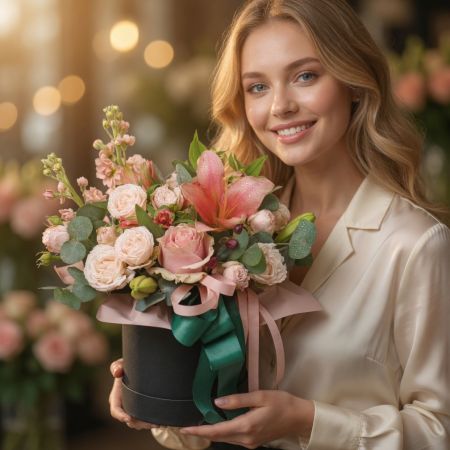
Bouquets in different styles: peony-style roses and flowers in a box.
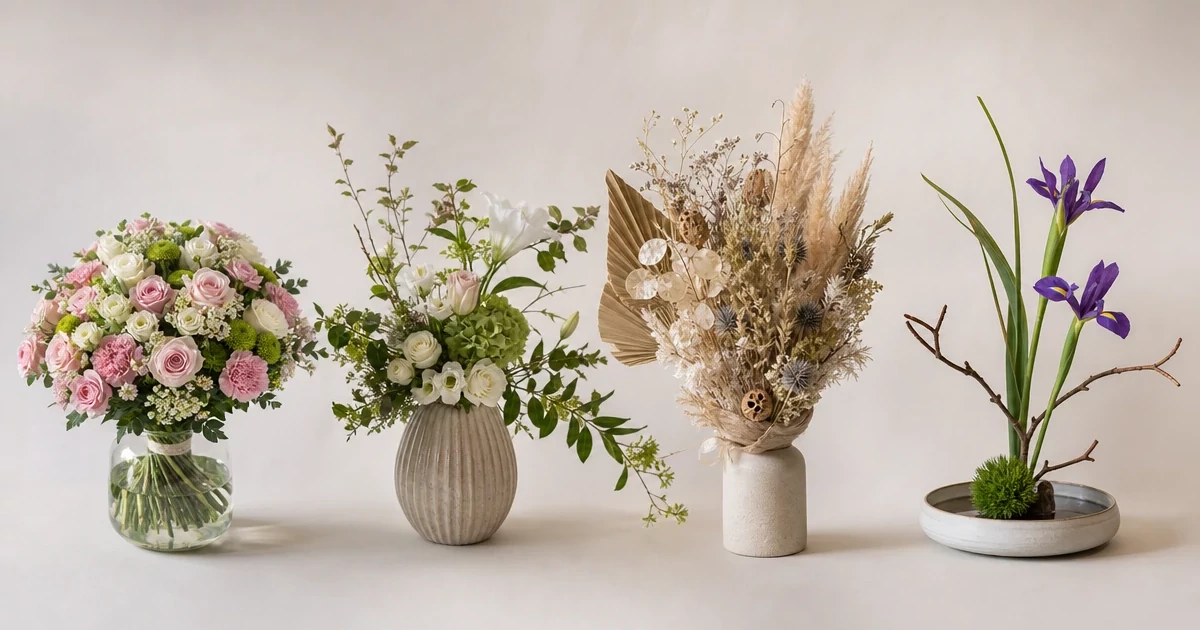
The main styles
- Classic — a dense round bouquet with flowers at one level; formal and festive.
- European — natural and airy, with varied flower heights, textured greenery and a garden feel.
- Minimalist — a few striking flowers or branches, lines and empty space; close to ikebana.
- Eco and boho — dried flowers, grasses, pampas, muted natural tones.
- Vintage — pastels, peony-style roses, lace and linen.
- Vegetative — plants placed as they grow in nature, following the season.
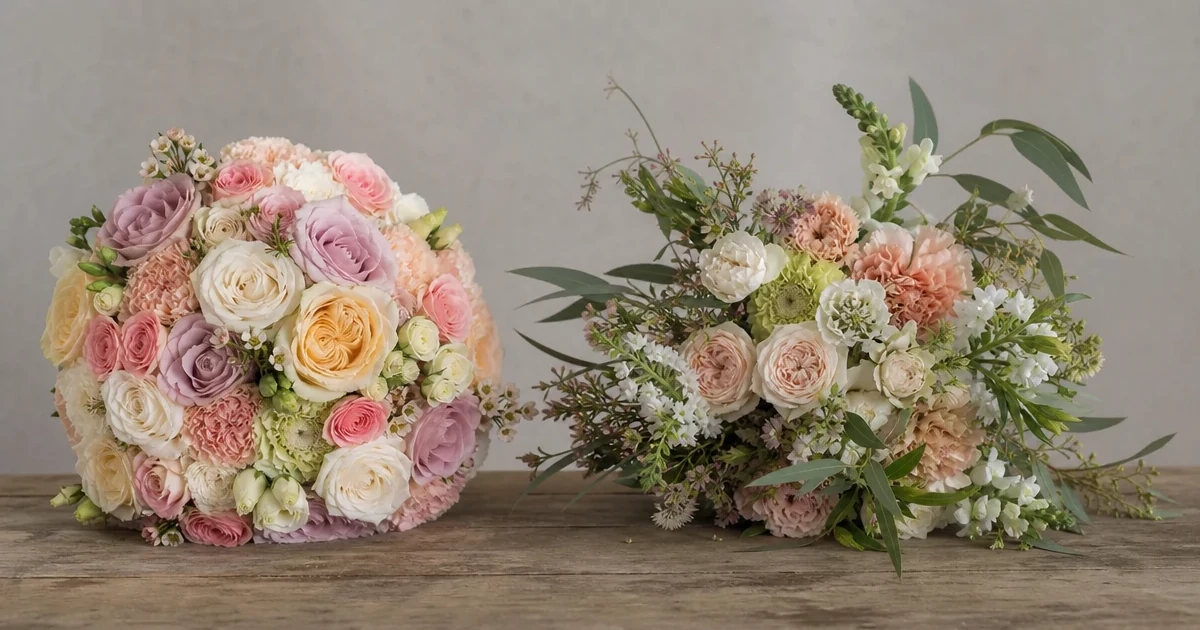
Bouquet-making techniques
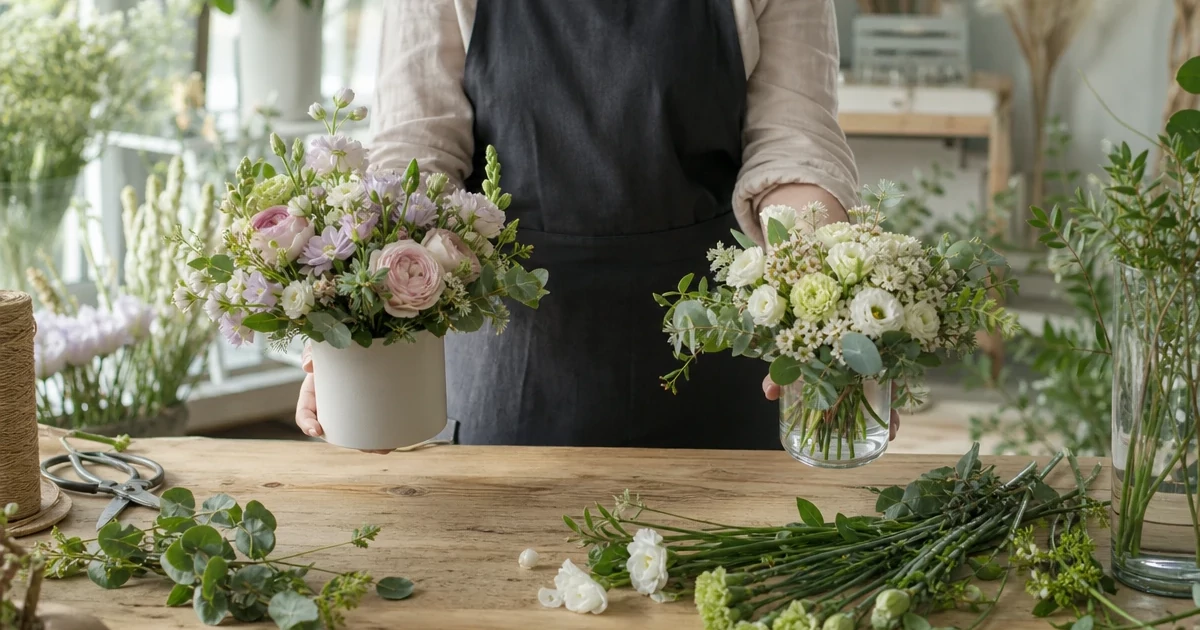
- Spiral — stems are laid at an angle in one direction; most hand-tied bouquets are made this way.
- Parallel — stems stand upright, as in nature; the basis of the vegetative style.
- Floral foam — for boxes, baskets and flower cakes.
- Cascade — flowers and greenery trail downwards; a wedding classic.
- Japanese — a few lines on a kenzan, see ikebana.
Technique also defines the shape — more on bouquet shapes.
How to explain the style you want to a florist
- Show 2–3 photos of bouquets you like and one you definitely do not.
- Name the occasion and the recipient: age, personality, favourite colours.
- State your budget and size — the florist will choose flowers accordingly.
- Mention whether scent matters and any allergies.
- Say how the bouquet will be kept: in a vase, in a box, or travelling.
Choosing a style
- For a formal business gift — classic or minimalist.
- For a girlfriend, mum or friend — European or vintage.
- For a long-lasting interior piece — an eco arrangement with dried flowers.
- If unsure, show your florist photos of bouquets you like.
On bouquet shapes see Types of bouquets, on the Japanese approach see Ikebana, and on dried arrangements see Dried flower arrangements.
FAQ
How does a European bouquet differ from a classic one?
A classic bouquet is dense and even; a European one is loose, with varied heights and plenty of greenery.
Which style is in fashion now?
Natural, garden-style bouquets and minimalism, plus combinations of fresh and dried flowers.

See photos in full size
Author: Maria Svitlovir
Graduated from Taras Shevchenko National University of Kyiv, Institute of Biology and Medicine (2001). BSc in Biology, MSc in Horticulture. Writes about plants, works at a garden centre selecting and repotting plants, and contributes to plant reference guides.
-

-
-
 Wooden Anniversary WishesRead full2026-02-11
-
 Creative flower potsRead full2017-02-28
-
-
