Hibiscus (Chinese Rose): Home Care, Types and Why It Won't Flower
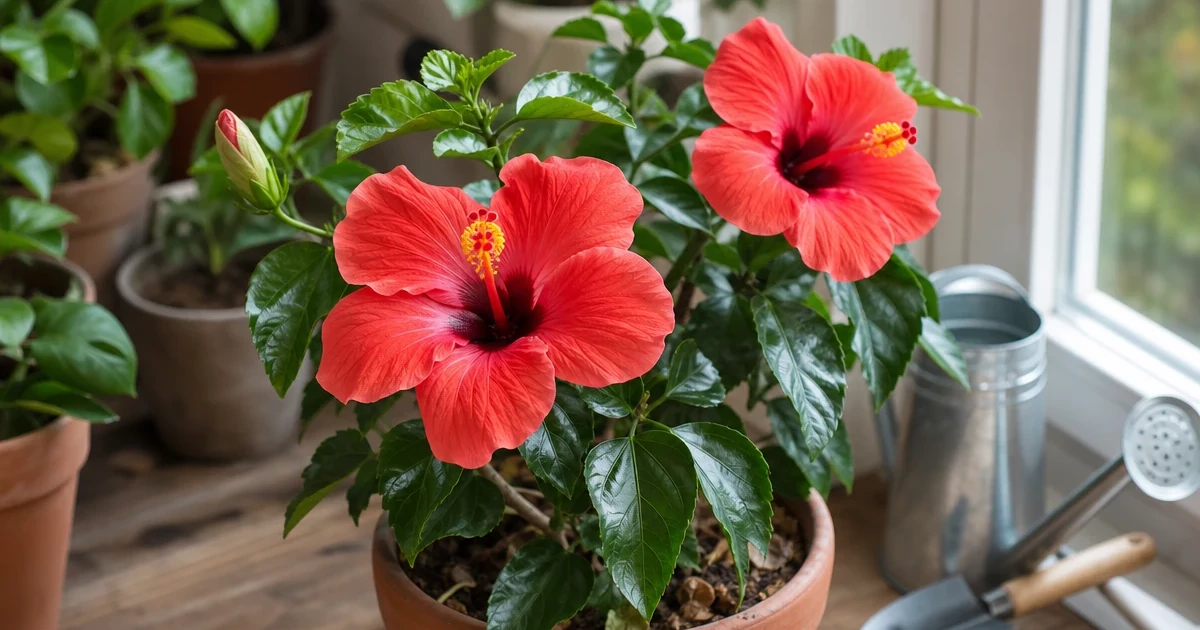
See photos in full size
Hibiscus is a genus of more than two hundred species — from the indoor Chinese hibiscus with huge glossy flowers to the hardy garden rose of Sharon and roselle, whose calyces make hibiscus tea. This guide focuses on the most popular one, the Chinese hibiscus: how to care for it at home so it flowers, why buds drop and which other hibiscus species are worth knowing.

Types of hibiscus
- Chinese hibiscus (Hibiscus rosa-sinensis) — an evergreen shrub for homes and conservatories. Flowers up to 15–20 cm come in red, pink, yellow and orange, single or double. It is Malaysia's national flower.
- Rose of Sharon (H. syriacus) — a deciduous garden shrub that survives Ukrainian winters outdoors and flowers from July to September.
- Hardy hibiscus (H. moscheutos and hybrids) — a perennial with giant 25–30 cm flowers that dies back in winter. Read more in our hardy hibiscus guide.
- Roselle (H. sabdariffa) — a tropical annual whose fleshy red calyces make tart hibiscus tea, also known as karkad? or "Sudanese rose".
- False roselle (H. acetosella) — grown for its deep burgundy, lobed leaves.

Caring for Chinese hibiscus at home
Light
Chinese hibiscus loves light: an east- or west-facing window is ideal, a south-facing one with shade from midday sun. In low light it gets leggy and won't flower. In summer it can go out on a balcony — acclimatise it to sun gradually.
Temperature
In summer 20–26 °C is comfortable. In winter it prefers 12–16 °C: cool conditions let it rest and set buds. Below 10 °C it may drop its leaves.
Watering and humidity
Water when the top 2–3 cm of soil is dry — generously in summer, moderately in winter. Use soft, room-temperature water and empty the saucer. Hibiscus likes humid air: during the heating season mist the leaves or stand the pot on a tray of wet pebbles.
Feeding
From April to September, feed every 2–3 weeks with a flowering-plant fertiliser high in potassium. Too much nitrogen gives lush leaves at the expense of flowers. No feeding in winter.

Repotting and soil
Repot young plants every spring and mature ones every 2–3 years, top-dressing in between. Choose a pot just 2–3 cm wider: in an oversized pot hibiscus grows roots and leaves instead of flowers. Use loose, rich soil — all-purpose compost with perlite or bark — over a drainage layer.
Pruning
Chinese hibiscus flowers on new growth, so spring pruning is the key to lots of blooms. In February–March cut stems back by a third, leaving 2–3 buds, and pinch the tips so the plant branches. Cuttings from pruning root easily in water or moist compost in 3–4 weeks.

Why hibiscus won't flower or drops its buds
- Too little light — the most common reason for no flowers.
- A warm winter. Without a cool rest, buds form poorly.
- No pruning — old stems flower weakly.
- Buds drop because of dry soil, draughts, sudden temperature changes or moving and turning the pot while it's in bud.
- Yellow leaves come from overwatering, cold water, chlorosis (hard water) or spider mites — check the undersides of the leaves.
Remember: each Chinese hibiscus flower lasts only 1–2 days, but on a healthy plant buds open one after another for months.
Pests
In dry air hibiscus often gets spider mites, aphids and whitefly. Prevent them with regular misting and a lukewarm shower for the leaves; if infested, use an insecticide or miticide according to the instructions.

Rose of Sharon in the garden
If you want hibiscus outdoors, choose rose of Sharon. It tolerates frosts of ?20 °C and below (mulch young plants for winter), loves sun and fertile soil and flowers on the current year's growth, so prune it in early spring. Its leaves appear late, in May, so don't give up on it too soon. For giant flowers in the garden, try hardy hibiscus.

Roselle and hibiscus tea
Hibiscus tea isn't made from petals but from the dried fleshy calyces of roselle (H. sabdariffa). The drink is ruby-red and tart and is enjoyed hot or iced. It's rich in anthocyanins but isn't a medicine; people with high stomach acidity should drink it in moderation.

Superstitions and symbolism
In some Eastern European folk belief the Chinese hibiscus has a gloomy nickname, the "flower of death", supposedly foretelling misfortune when it blooms unexpectedly. There's no basis for this superstition. Elsewhere hibiscus symbolises joy, beauty and hospitality: in Hawaii a flower behind the ear signals a woman's relationship status, and in Malaysia the five petals of the bunga raya represent the five principles of the national philosophy.

Love flowering houseplants? Browse our potted plants and our guide to combining houseplants in one pot.
FAQ
How long does a hibiscus flower last?
Each flower lasts 1–2 days, but the plant blooms in waves from spring to autumn.
Can Chinese hibiscus live outdoors?
Only in summer: bring it inside when temperatures fall below 10 °C.
When should I prune hibiscus?
Chinese hibiscus in February–March; rose of Sharon in early spring before the leaves open.

See photos in full size
Author: Maria Svitlovir
Graduated from Taras Shevchenko National University of Kyiv, Institute of Biology and Medicine (2001). BSc in Biology, MSc in Horticulture. Writes about plants, works at a garden centre selecting and repotting plants, and contributes to plant reference guides.
-

-
 Birthday Wishes for a NephewRead full2025-10-31
-

-
 Happy Birthday, Andrii: WishesRead full2025-10-27
-

-
 Silver Wedding Anniversary WishesRead full2026-04-15