Cosmos: An Easy Annual for an Airy Flower Bed
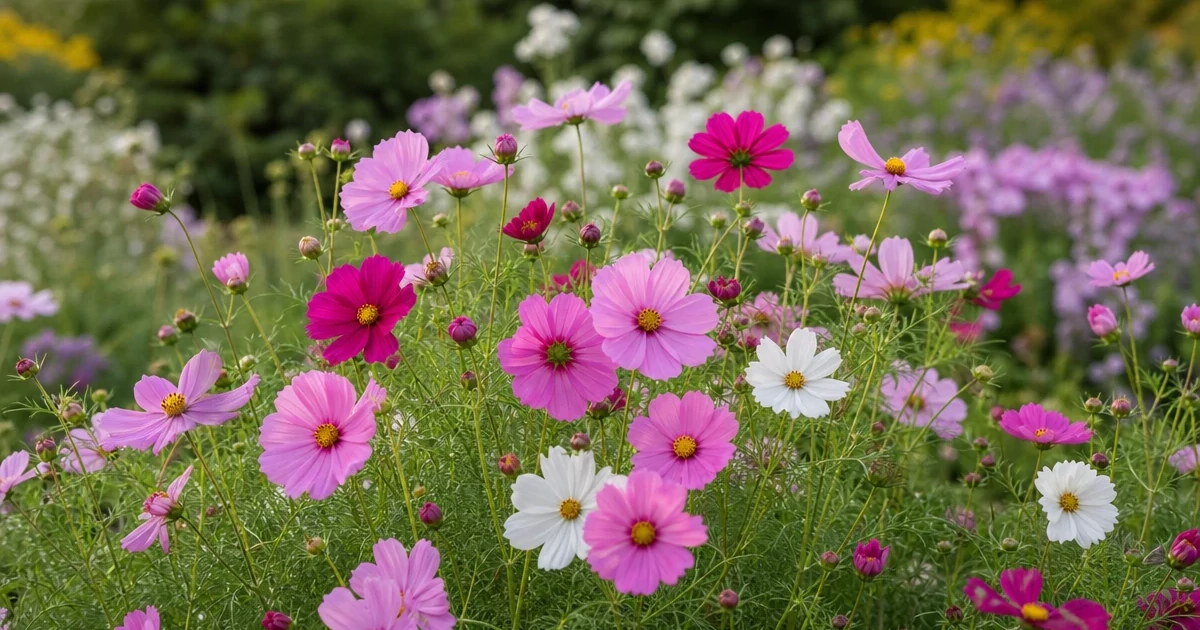
See photos in full size
Cosmos is one of the easiest garden flowers: sow the seed in May and from midsummer to the frosts you will enjoy a cloud of light daisies above feathery foliage. It grows in almost any soil, draws butterflies and self-seeds. Here are the varieties, how to sow and a few secrets for plenty of flowers rather than just foliage.
Types and varieties
- Garden cosmos (Cosmos bipinnatus) — the main species, 60–150 cm: the 'Sensation' series (pink, white, crimson), double 'Double Click', cup-shaped 'Cupcakes', tubular-petalled 'Seashells' and dwarf 'Sonata'.
- Sulphur cosmos (C. sulphureus) — yellow, orange and red, heat-tolerant.
- Chocolate cosmos (C. atrosanguineus) — maroon flowers that smell of chocolate; lift the tuberous roots for winter like dahlias.
When and how to sow
- Outdoors: in May after the frosts, 2–3 seeds per station, 1 cm deep, 30–40 cm apart.
- Seedlings: in April for earlier flowers; they germinate in about a week.
- Autumn sowing: sow in November and cosmos comes up in spring.
Care: less is more
- Sun: at least 6 hours a day.
- Soil and feeding: cosmos flowers best on poor soil; fertiliser and compost give lush foliage and late flowers.
- Pinching: pinch out the tips of young plants at 30 cm for a bushier plant.
- Deadheading: extends flowering; leave a few heads to set seed.
- Support: tall varieties need staking in windy spots.
Cosmos in bouquets
Cosmos is a favourite for garden-style bouquets — light, airy and softly coloured. Cut early in the morning as the flowers begin to open; they last 5–7 days and buds keep opening. It pairs with cornflowers, tanacetum and grasses. More ideas in annuals for flower beds and wild flowers; the full A–Z is in types of flowers. Cosmos is considered safe for people and pets.
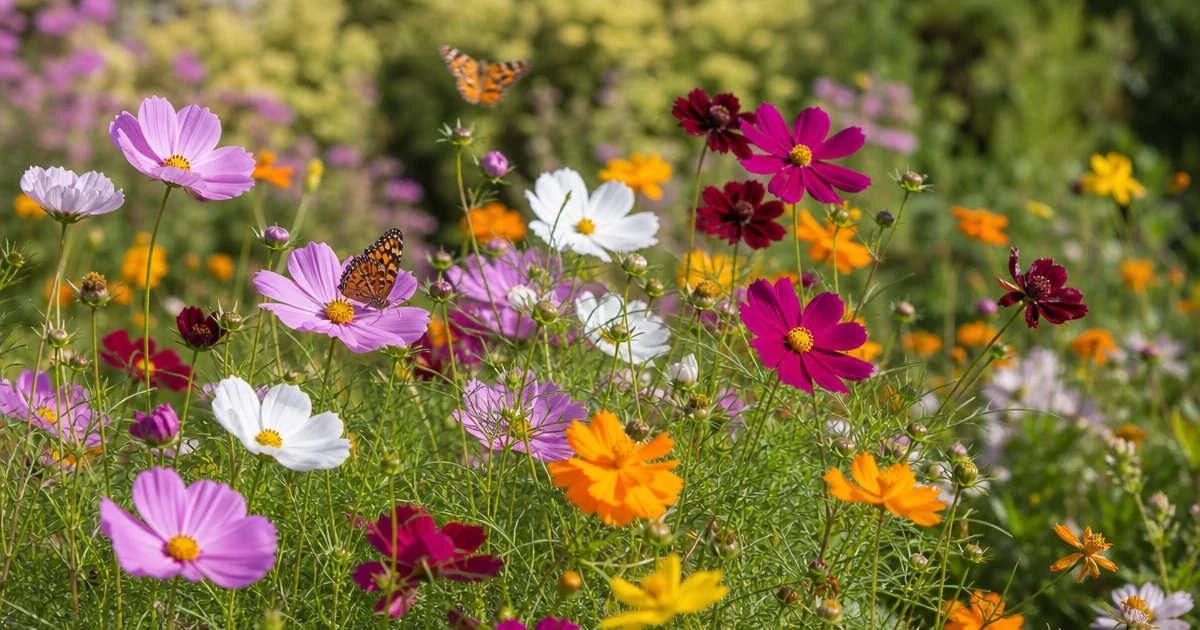
See photos in full sizeCosmos of various types and colors in a garden bed.
FAQ
Why is my cosmos growing but not flowering?
Usually too much fertiliser or very rich soil, or too much shade.
When should I sow cosmos outdoors?
In May after the frosts, or in November for spring germination.
Does cosmos self-seed?
Yes — leave a few spent flowers and new plants will appear next year.

See photos in full size
Author: Maria Svitlovir
Graduated from Taras Shevchenko National University of Kyiv, Institute of Biology and Medicine (2001). BSc in Biology, MSc in Horticulture. Writes about plants, works at a garden centre selecting and repotting plants, and contributes to plant reference guides.
-
 Gift Ideas for GardenersRead full2025-04-25
-

-

-

-

-
 Medical Workers' Day WishesRead full2026-08-11