Sorry in Different Languages: How to Apologise in 35+ Languages

See photos in full size
“Sorry” is one of the first words worth learning in a foreign country: it helps in crowds, on public transport and in awkward moments. Apologising in someone’s native language can also mean a lot in an international relationship. Here is how to say sorry in more than 35 languages — with spelling, a pronunciation hint and the cultural nuances that keep your apology from sounding wrong.
Sorry in European languages
| Language | How to write it | Pronunciation |
|---|---|---|
| Ukrainian | Вибач / Пробач | VY-bach / PRO-bach |
| Polish | Przepraszam | psheh-PRAH-shahm |
| German | Entschuldigung / Es tut mir leid | ent-SHOOL-di-goong / es toot meer lyte |
| French | D?sol?(e) / Pardon | day-zo-LAY / par-DOHN |
| Spanish | Lo siento / Perd?n | loh SYEN-toh / per-DOHN |
| Italian | Scusa / Mi dispiace | SKOO-zah / mee dee-SPYAH-cheh |
| Portuguese | Desculpa | desh-KOOL-pah (Portugal), jees-KOO-pah (Brazil) |
| Dutch | Sorry / Het spijt me | het SPYTE meh |
| Czech | Promi? | PRO-meen |
| Slovak | Prep?? | PREH-pahch |
| Bulgarian | Извинявай | iz-vee-NYAH-vai |
| Croatian, Serbian, Slovenian | Oprosti | oh-PROS-tee |
| Belarusian | Прабач | prah-BAHCH |
| Lithuanian | Atsipra?au | ah-tsee-prah-SHOW |
| Latvian | Piedod | PYEH-dohd |
| Estonian | Vabandust | VAH-bahn-doost |
| Finnish | Anteeksi | AHN-tehk-see |
| Swedish | F?rl?t | fur-LOHT |
| Norwegian | Unnskyld | OON-shool |
| Danish | Undskyld | OHN-skool |
| Hungarian | Bocs?nat | BO-chah-not |
| Romanian | ?mi pare r?u | uhm PAH-reh rau |
| Greek | ???????? | see-GHNO-mee |
Capital letters mark the stressed syllable. Pronunciation is approximate — check the word in an online translator to be sure.

See photos in full sizeApologising with gestures in different cultures.
Sorry in Asian, Middle Eastern and African languages
| Language | How to write it | Pronunciation |
|---|---|---|
| Turkish | ?z?r dilerim | uh-ZOOR dee-leh-REEM |
| Georgian | ?????? | BOH-dee-shee |
| Armenian | ???????????? | neh-roh-ghoo-TYOON |
| Azerbaijani | Ba???lay?n | bah-ush-LAH-yun |
| Hebrew | ????? | slee-KHAH |
| Arabic | ??? | AH-sif (m), AS-fa (f) |
| Hindi | ???? ????? | maaf KEE-jee-yeh |
| Chinese (Mandarin) | ??? | dway-boo-CHEE |
| Japanese | ?????? / ????? | go-men na-SAI / su-mee-MA-sen |
| Korean | ??? / ????? | mee-AN-heh / chweh-song-ham-nee-da |
| Vietnamese | Xin l?i | sin loy |
| Thai | ????? | kor TOHT |
| Indonesian | Maaf | mah-AHF |
| Swahili | Samahani | sah-mah-HAH-nee |
| Esperanto | Pardonon | par-DOH-non |
Cultural nuances: one word, different meanings
- German. “Entschuldigung” is for getting past or getting attention; “Es tut mir leid” is for when you are truly sorry.
- Japanese. “Sumimasen” means both “excuse me” and “thank you for the trouble”; “gomen nasai” is for people close to you, and formal situations call for “moshiwake arimasen”.
- Korean. “Mianhae” is for friends and family; elders and strangers should hear the polite “joesonghamnida”.
- Polish. “Przepraszam” is universal: “excuse me”, “pardon” and “I am sorry” all in one.
- Ukrainian. “Vybach” is neutral, “probach” is deeper and closer to “forgive me”, and “pereproshuiu” is a polite “excuse me”.
Apologising in your partner’s language
If you and your partner speak different languages, a few words in their native tongue show real effort. Learn not just “sorry” but a simple phrase like “I love you”, handwrite it on a card and add a translation so nothing is lost. For the correct Ukrainian forms, see vybach mene or vybach meni.
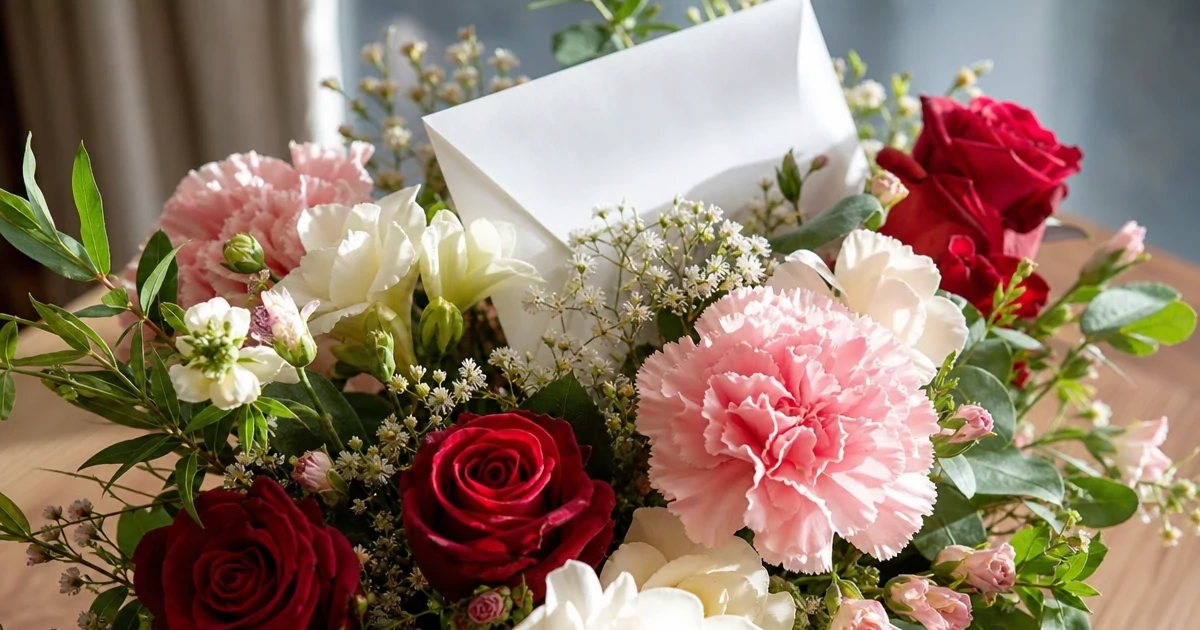
See photos in full sizeA bouquet with a card is a universal gesture of apology
Flowers need no translation
A bouquet is understood in any language. Soft white or pink flowers, or red roses, with a card saying sorry in the recipient’s language make a gesture people remember. For more ideas, see how to say sorry and how to apologise with flowers.
FAQ
How do you say sorry in Ukrainian?
“Вибач” (vybach) or, more emotionally, “пробач” (probach). For “excuse me”, say “перепрошую” (pereproshuiu).
How do you say sorry in Polish?
“Przepraszam” (psheh-PRAH-shahm) — a universal word for any situation.
How do you say sorry in Japanese?
“Gomen nasai” to people close to you, “sumimasen” for everyday situations and “moshiwake arimasen” in formal settings.

See photos in full size
Author: Maria Svitlovir
Graduated from Taras Shevchenko National University of Kyiv, Institute of Biology and Medicine (2001). BSc in Biology, MSc in Horticulture. Writes about plants, works at a garden centre selecting and repotting plants, and contributes to plant reference guides.