Floral Prints in Fashion: History and How to Wear Them
Flowers are one of the oldest and best-loved motifs in clothing. They have been embroidered, woven and printed on fabric for centuries, and every era has found something of its own in them: luxury, romance, protest or national identity. Here is how the floral print travelled from Indian chintz to today’s catwalks, and how to wear it now.
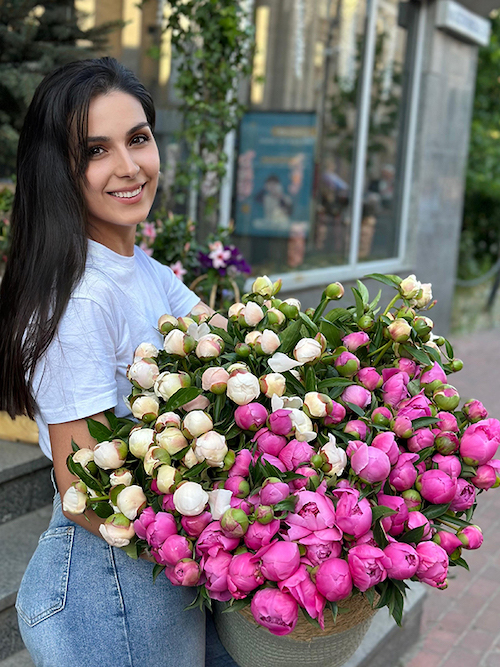
Flowers to match your look: peony-style roses and spray roses.

A little history
- Indian chintz. In the 17th century light cotton fabrics printed with bright flowers poured into Europe from India. They became so popular that France banned their import and production for decades, and England passed laws restricting their sale to protect local weavers.
- The 19th century. The English designer William Morris created wallpapers and textiles with plant patterns that are still produced from his designs.
- 1947. After the war, Christian Dior’s New Look with its full skirts brought back feminine silhouettes and romantic floral fabrics.
- The 1960s–70s. Flowers became the symbol of the hippie movement: flower power.
Flowers in Ukrainian tradition
Plant motifs are among the most common in Ukrainian embroidery: roses, hollyhocks, poppies, guelder rose and grapevine. Floral shawls, flower crowns with ribbons and Petrykivka-style painting are also recognisable parts of the national style. The flower crown tradition is at its most vivid on Ivana Kupala.
How to wear a floral print
- Small prints are a versatile choice for everyday dresses, blouses and shirts.
- Bold prints make a statement: let one floral piece lead the outfit and keep the rest plain.
- Pairings. Florals look great with denim, white, beige and colours picked from the print itself.
- Two prints can work together if they share a palette and differ in scale.
- Accessories. Not ready for a floral dress? Start with a scarf, bag or shoes.

Fresh flowers as accessories
Besides prints, fresh flowers are worn too: wrist corsages, hair clips, buttonholes and crowns. Read more in “Fresh flower accessories” and, for weddings, “Bridal flower crown”.

FAQ
Is a floral print suitable for the office?
Yes, if you choose a small pattern in muted colours and a tailored cut.
Can I wear florals in winter?
Of course: dark backgrounds, rich shades and heavier fabrics make flowers perfect for the cold season.

See photos in full size
Author: Maria Svitlovir
Graduated from Taras Shevchenko National University of Kyiv, Institute of Biology and Medicine (2001). BSc in Biology, MSc in Horticulture. Writes about plants, works at a garden centre selecting and repotting plants, and contributes to plant reference guides.