Aspidistra: The Cast-Iron Plant for Shade and Bouquets
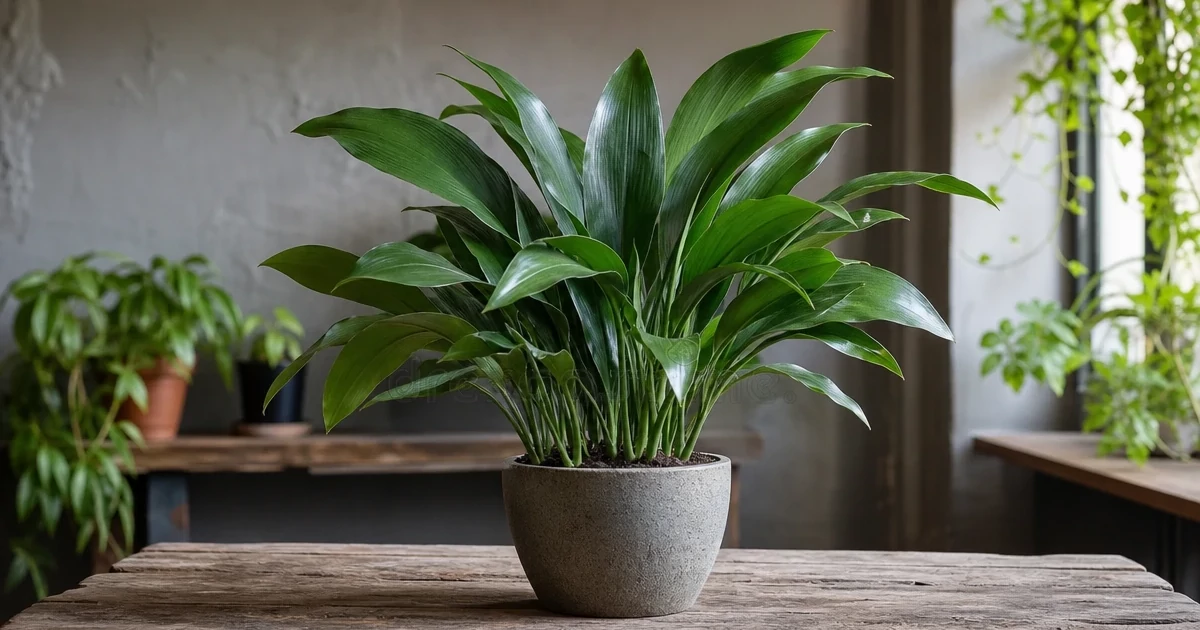
See photos in full size
Aspidistra is almost impossible to kill: it copes with shade, cool rooms and irregular watering and can live for years in a corner where other plants die. That is why the English nicknamed it the cast-iron plant. Florists love it for its long, tough leaves, which they fold into loops, wraps and geometric accents. Here is how to care for aspidistra at home and how it is used in floristry.
What Is Aspidistra
Aspidistra elatior is an evergreen perennial in the asparagus family, native to islands in southern Japan. It has no stem: broad lance-shaped leaves 50–70 cm long rise straight from the rhizome on long stalks. Its flowers are easy to miss — purple star-shaped blooms appear right at soil level, often hidden under the leaves. The plant is considered non-toxic to cats and dogs, so it suits homes with pets.
Types and Varieties
- Green aspidistra — the classic plain dark-green form and the toughest.
- Variegata — with lengthwise cream stripes; needs a little more light to keep its variegation.
- Milky Way — leaves sprinkled with tiny pale dots like a starry sky.
Aspidistra Leaves in Bouquets
Aspidistra leaves are a florist favourite: thick, flexible and fresh for weeks. They are folded into loops and stapled, split into strips, wrapped around stems or used as a collar around a bouquet. Large leaves give designs a modern graphic look, especially with cymbidium, anthurium, calla lilies and roses. Cut leaves last two weeks or more in water. More foliage ideas are in flowers and greenery for bouquets.
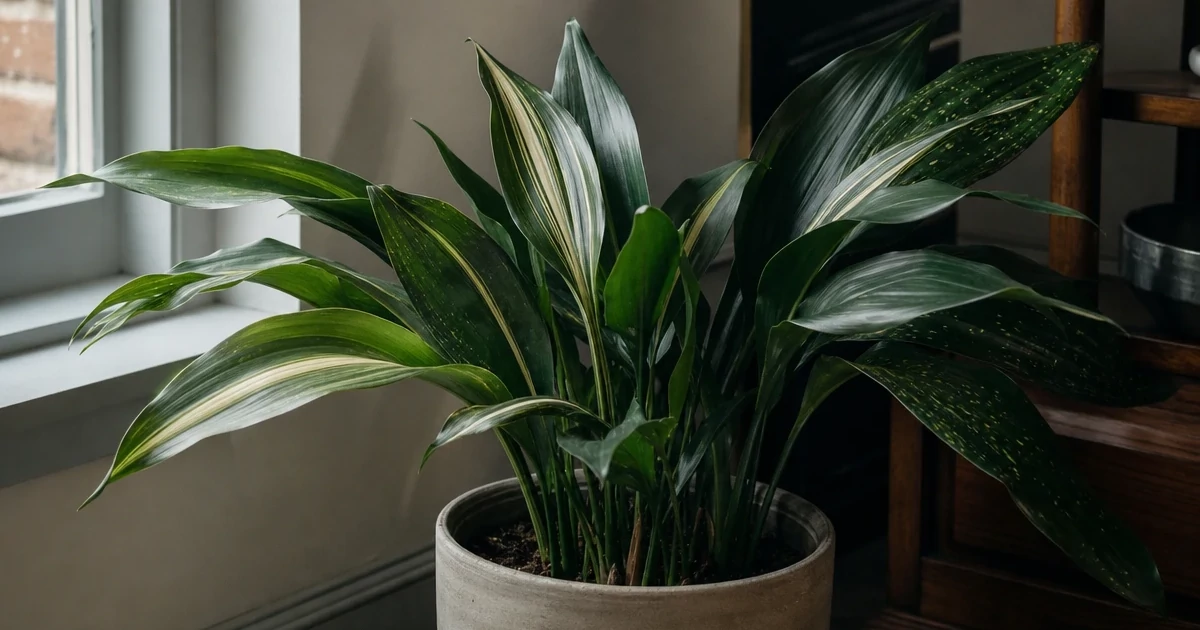
See photos in full sizeAspidistra tolerates shade and is suitable for homes with pets
Aspidistra Care at Home
Light. Part shade or shade; direct sun scorches the leaves. Great for north windows and hallways.
Temperature. Happy at 15–22 °C and tolerates a cool 5–10 °C in winter.
Watering. Moderate, once the top of the soil dries; overwatering is riskier than drying out.
Leaves. Wipe off dust with a damp cloth to keep them glossy.
Repotting. Rarely — every 3–4 years once the rhizome fills the pot, which is also the time to divide it. More shade-tolerant plants are in houseplants.
FAQ
Why is aspidistra called the cast-iron plant?
Because it is so tough: it tolerates shade, cold, dry air and missed waterings.
Does aspidistra flower indoors?
Yes, but discreetly: small purple flowers appear at soil level.
Why are aspidistra leaves turning yellow?
Usually overwatering or direct sun. Water less and move it into shade.
How long does an aspidistra leaf last in a bouquet?
Two weeks or more — it often outlives every flower in the arrangement.

See photos in full size
Author: Maria Svitlovir
Graduated from Taras Shevchenko National University of Kyiv, Institute of Biology and Medicine (2001). BSc in Biology, MSc in Horticulture. Writes about plants, works at a garden centre selecting and repotting plants, and contributes to plant reference guides.
-
 Trade Workers Day WishesRead full2026-04-11
-
 Holy Eve WishesRead full2026-04-28
-

-
 Ivan Name Day WishesRead full2026-06-05
-

-
 Happy Birthday, Mariia: WishesRead full2025-10-16